
Tips for flying with chronic pain
Flying can be tough at the best of times, but add chronic pain into the mix and it becomes a whole new challenge. Here's how we make it as comfortable as possible.
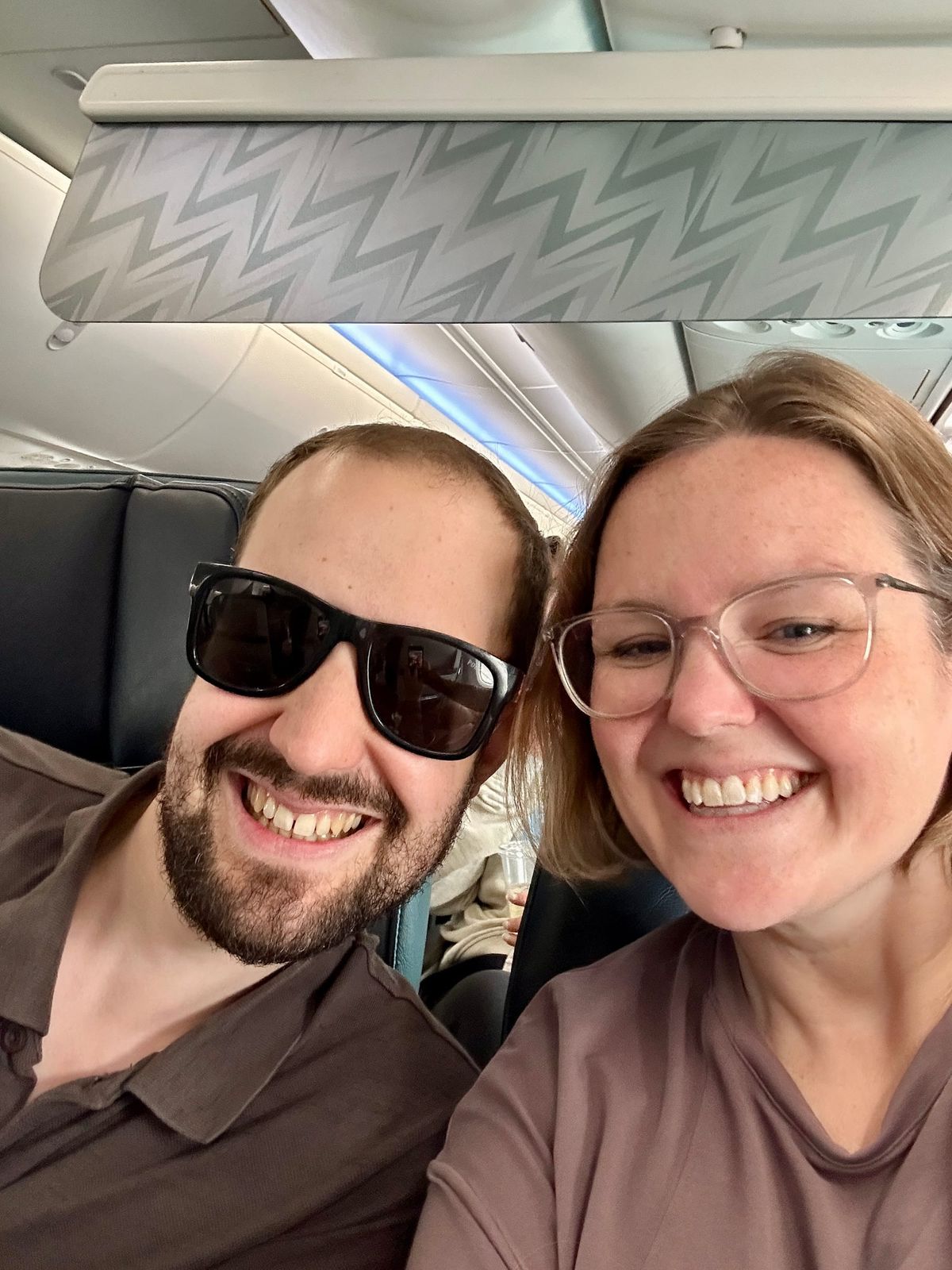
Juan can find the toilet on a 777 without waking me up. That sounds like a small thing until you know he's blind, has been in 43C for six hours, and his knee has opinions about all of it.
Flying can be tough at the best of times, but add disabilities into the mix, and it becomes a whole new challenge. With family in the Isle of Man and Canada, we've had LOTS of time to test seats and strategies. Juan wouldn't go so far as to say he enjoys flying, but it's definitely not cause for dread anymore.
Here's how we make it as comfortable as possible:
1. Choose your flights like you're planning a military campaign
There is no direct flight from the Isle of Man to Canada, so we've had to get good at this! Basically every trip we take, no matter the destination, has a connection in London, and then we assess from there.
- Know thyself and plan accordingly! Juan's back and Juan's fatigue have very different opinions on whether we should fly direct or break up the trip into smaller chunks with time to walk. For us, direct flights are usually worth it — fewer hours and no changing planes reduces the stress enough to compensate for the longer time without sustained movement.
- If you need to connect:
- Allow plenty of time so you’re not rushing through airports.
- Do your best to book through on a single airline, or on airlines which have a partnership. That way you won't have to collect and transfer your bags. On a single through ticket, it's the airlines problem, and if you misconnect, they rebook you.
- Choose the connecting airport wisely; some hubs are a short walk between gates, some are a train ride and a second security check.
- Layover length has a ceiling as well as a floor, you want to optimise for long enough that you're not rushing, but short enough that you're not spending five hours in a very uncomfortable terminal chair, wondering why you're not there already.
2. Pick your seat wisely
- An aisle seat means you can get up to stretch without disturbing others.
- Try to sit near a space where you can get up and walk around – that's usually the back of the plane near a bathroom.
We know that's a less desirable seat because... well... you're near the bathroom. You run the risk of people (and the occasional smell) disturbing you. But it's also usually right beside where the cabin crew have some open space. - Bonus points if being close to the bathroom is helpful for your particular disability. Because Juan is blind, sitting right beside a bathroom means that he can easily navigate there without needing to call for assistance or wake Kendra up. 😴
3. Pack your own first-class comfort kit
- A small pillow, neck support, or lumbar cushion can make a huge difference.
- Add slippers — slipping out of shoes helps circulation and just all around feels better.
- Noise-cancelling headphones or earplugs can reduce stress and noise-triggered pain.
4. Dress for flexibility
- Wear clothing that moves with you and adapts to different cabin temperatures. Juan likes light long-sleeve shirts where he can roll the sleeves up or down; Kendra prefers t-shirts and a layered cardigan. Both work because they’re versatile and easy to adjust.
- Don’t forget comfy pants. Nothing’s worse than a waistband digging in for 10 hours straight.
- If compression socks will help, wear them! Toss an extra pair of socks in your carry-on.
5. Plan your meds
- Keep pain medication in your carry-on, not checked luggage and pack more than you think you'll need in case of delays.
- If you'll need any medication at your destination that you can't afford to lose or go without during your trip, pack that in your carry-on too.
- If there's medication you need to take at certain times of day, do the maths BEFORE you're jet lagged in a new timezone, and set reminders on your phone. Trust us, your sleep-deprived brain will thank you.
6. Move and stretch often
- Gentle movement can stop muscles from stiffening up.
- Stand up every hour or so if you can, even just to walk to the bathroom or annoy your wife.
- Chair exercises can really help: shoulder rolls, seated twists, ankle circles, seated marches, and gentle neck stretches.
Here are three specific moves for feet/ankles which help with circulation:
1. Spreading the toes then curling and squeezing them
2. Ankle flex/extend - lift the toes up towards the knees, easing the heels away then reverse pointing the toes, and
3. Ankle rotations, move the feet round in circles, then reverse direction of the circles
All of these moves should be unhurried and leisurely. After all, what else do you have to be doing?
7. Stay hydrated and snack smart
- Airplane air is very drying, and dehydration can worsen pain and fatigue.
- Bring your own water bottle to refill after security.
- Pack snacks you enjoy that also make you feel good (fruit, oat bars, whatever fuels you best). Super salty airport snacks are delicious, but won't help the dehydration issue.
8. Use mobility or special assistance services
- Airports are exhausting. Booking wheelchair or buggy assistance can save your energy for the trip itself.
- You don’t have to “prove” your pain — if you need the service, ask for it.
Do NOT feel guilty! They’re there to help you. That’s literally their job.
9. Get to know your flight attendant
- If you've booked special assistance (and you should have... see number 8...), they should already know you're coming.
- A quick, friendly chat when you board lets them know you may need extra support. Most crew are kind and happy to look out for you if they’re aware of your situation.
10. Know what you need for recovery
- Plan gentle movement, pain meds, and lots of rest breaks on day one.
- We keep our first day at the destination totally flexible — no fixed plans — so we can play it by ear and listen to our bodies.
11. Bonus tip: flotation tanks are magic
- If you can find a float spa at your destination, it can be an amazing way to reset after a long journey.
- Benefits often include pain relief, deep relaxation, better sleep, and a feeling of weightlessness that takes pressure off joints.
Final thoughts
Flying with chronic pain will probably never be completely easy, but it doesn’t have to be miserable. With the right planning, a few comfort hacks, and some kindness to yourself, it’s possible to arrive feeling more human and ready to enjoy your trip.
We hope some of these tips help make your next flight a little smoother — and if you’ve got your own tried-and-true tricks, we’d love to hear them!